What Karo's Oversubscribed Bond Says About Zimbabwe's Investment Case
The demand behind a $300 million bond deal is a sharper signal for frontier-market mining than the rate that priced it.
By ZIX Editorial
Markets desk · 3 min read
NASA, ISS Expedition 25 crew · Public domain
Tharisa priced a $300 million, five-year senior secured bond for its Karo Platinum Project on 10 September, with a coupon of 11.00% and an issue price of 98 of par. The rate made the headline. The more interesting number sat below it: more than 150 institutional investors, spanning Europe, the UK, the Middle East, North America and Asia, put in orders for paper backed by a mine in Zimbabwe, a jurisdiction that international debt markets have mostly kept at arm's length for two decades.
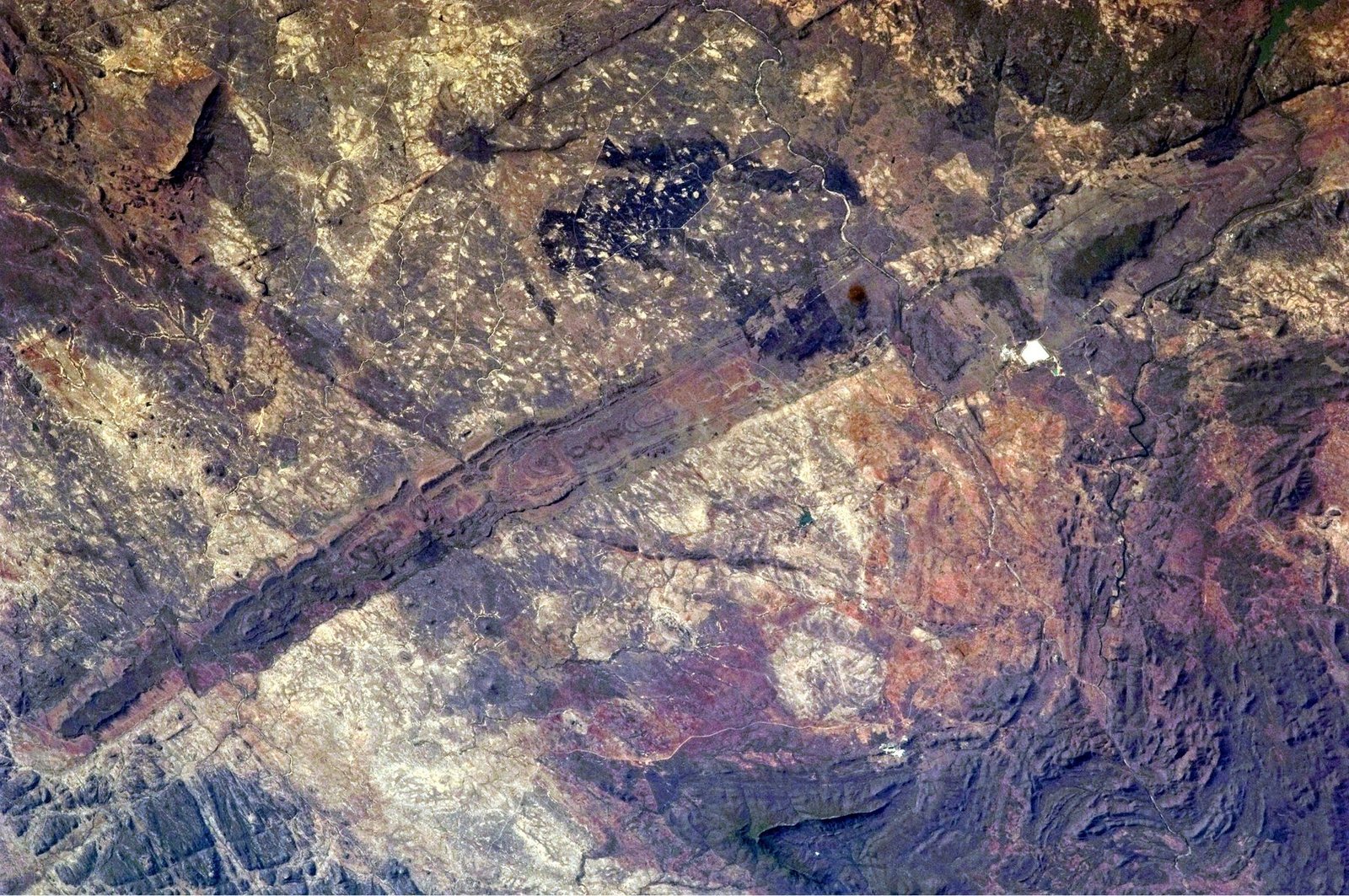
The pricing reflects how investors weigh Zimbabwean risk today. The oversubscription reflects something else: a growing pool of fixed-income managers who now treat that risk as a number to negotiate rather than a market to skip. Tharisa reached this point by stacking up the elements a Tier 1 project on the Great Dyke has historically lacked. A Special Mining Lease Agreement with the government, signed 20 August, secured tenure. A long-term offtake agreement with Valterra validated demand for Karo's PGM concentrate before the mine has produced an ounce. The bond then supplied the capital to build it.
A pattern, not a one-off
Karo's raise has company. Caledonia Mining's listing on the Victoria Falls Stock Exchange, Zimbabwe's dollar-denominated bourse, was itself oversubscribed, drawing local and regional investors into a producing gold asset and lending the young exchange added depth and credibility. Caledonia followed that listing with a $150 million capital raise for its Bilboes gold project, reported by Reuters in January 2026 as a rare instance of international capital flowing directly into a Zimbabwean gold mine. Karo shows that patient foreign capital will fund large-scale mine construction in Zimbabwe. Caledonia shows the same appetite on a second commodity, and on both the equity and debt sides of its balance sheet. On its own, any one of these deals could be dismissed as an outlier. Taken together, they read as evidence that the discount investors have long attached to Zimbabwean mining risk is narrowing across instruments, sectors and, now, more than one company.
Why it matters beyond one mine
For Zimbabwe, the value of the deal extends past Karo itself. Arguments about fiscal and sovereign stability tend to stay abstract until a market puts a price on them. A five-year, dollar-denominated bond, priced by more than 150 institutions, gives the country a concrete reference point: the next developer negotiating terms, the next bank assessing a loan, the next ratings review all now have a market-tested data point to work from. That lowers the cost of proving Zimbabwe bankable the second and third time around.
For the mining sector generally, the lesson has less to do with timing than with structure. Tharisa financed Karo and the parallel underground transition at its flagship Tharisa Mine through separate funding lines: bond capital for Karo, development loans from Absa and Standard Bank and a revolving facility from Nedbank for the underground project, with chrome cash flow underwriting PGM development throughout. Rising PGM prices made the timing favourable, but the diversified funding stack is what made the deal financeable in the first place. Developers eyeing other frontier assets are likely to be measured against that template: secure tenure early, lock in offtake before first ore, and spread financing across instruments and lenders rather than leaning on a single source.
Editorial note: Scaffolding copy written to establish structure, voice and length. Replace before publication.