Why investors should look again at Zimbabwe’s manufacturing sector
Newer firms are growing faster — and that creates space for new entrants.
By ZIX Editorial
Industry desk · 6 min read
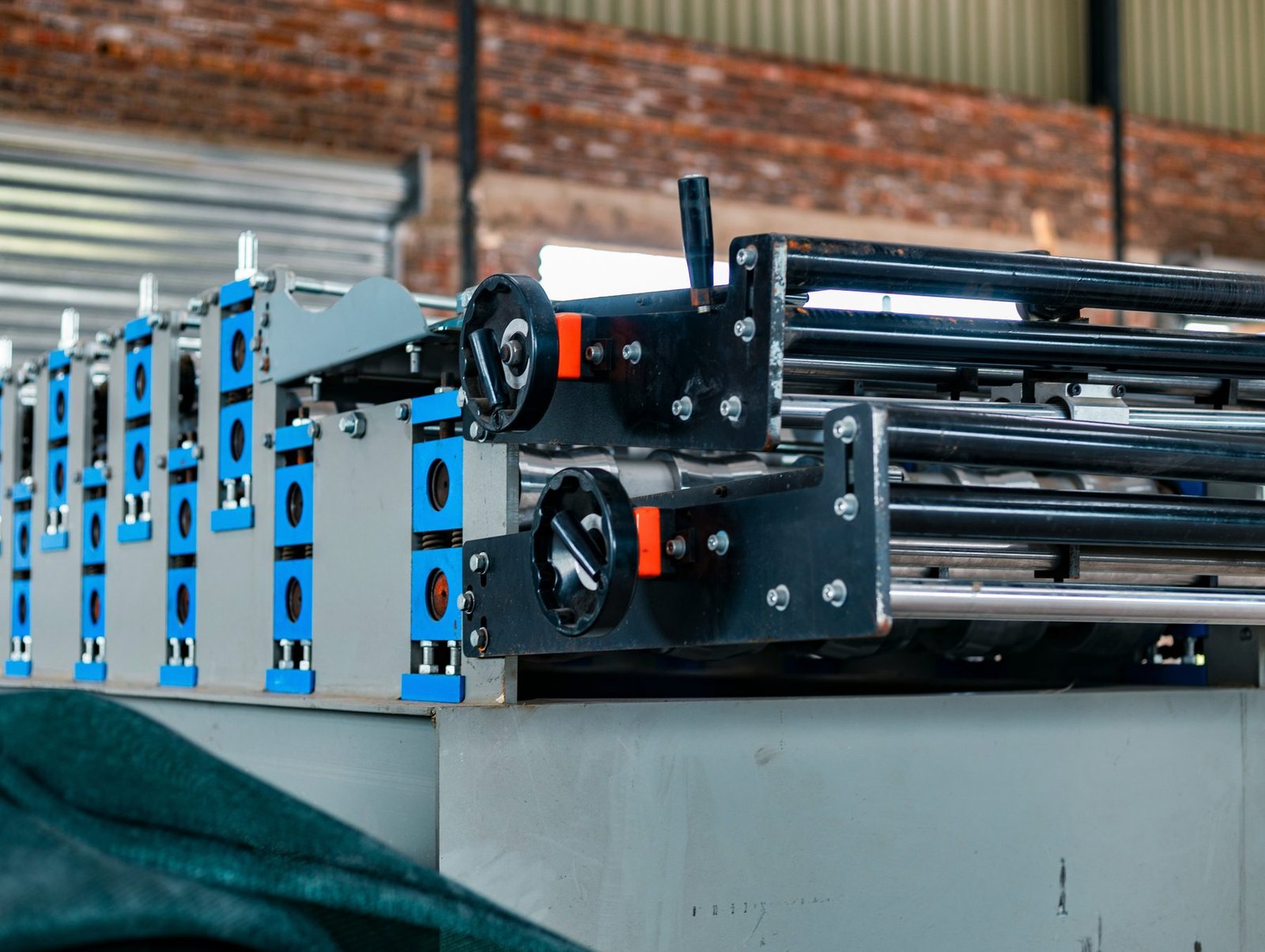
Divaris Shirichena · Unsplash Licence
For a long time, many investors have assumed that older manufacturing firms are safer bets. They have more experience, long-standing customers, established supply chains, and deeper knowledge of the market, which creates massive barriers to entry for new entrants. In many sectors, that assumption makes sense. But the evidence from Zimbabwe’s manufacturing sector now points to a different story.
The CZI 2025 Manufacturing Sector Survey, which covered 388 formal manufacturers, shows that age is no longer the strongest sign of strength. Younger firms are often more flexible, quicker to adopt technology, and better placed to respond to new demand. But this does not make older firms irrelevant. It may make some of them attractive takeover or partnership targets if their assets can be made more productive under new ownership, capital, or management.
A younger sector is emerging
One of the clearest findings is that Zimbabwe’s manufacturing base is younger than many people may think. Only 14% of surveyed firms are older than 50 years. By contrast, 18% are less than five years old, and about half are less than 15 years old.
| Firm age | Share of firms | What it tells investors |
|---|---|---|
| Under 5 years | 18% | New entrants are already visible in the sector. |
| Under 15 years | 50% | The sector is being renewed by younger firms. |
| Over 50 years | 14% | Long history alone is not enough to guarantee growth. |
This matters because it shows that manufacturing in Zimbabwe is not closed to new players. A large part of the sector is already made up of relatively young businesses, and many are growing. That should change how investors think about opportunity. Instead of asking only which firms have been around longest, investors should ask two questions: which new firms can scale, and which older firms can be improved through capital, management change, and innovation?
Why newer firms are doing better
The main reason newer firms are standing out is simple: they are often more willing, or more able, to change. Many older firms carry old equipment, older systems, and ways of working that are hard to update. Younger firms may have fewer legacy costs and can build around newer tools from the start.
Technology is one example. The survey shows that firms that upgraded technology recorded about 10 percentage points higher turnover and output growth than firms that did not. Yet only 33.6% of firms have upgraded technology. That means the productivity opportunity is still largely untapped.
For investors, this is important. The opportunity is not just to buy into old factories or to start from scratch. It is to identify where capital and better execution can make a difference. In newer firms, that may mean funding growth. In older firms, it may mean modernizing equipment, changing incentives, improving systems, and building a more innovative culture.
The strongest growth is in the middle
The survey also shows that medium-sized firms are performing especially well. They are growing faster than both small and large firms in output and turnover. This is important because it points to a practical investment path: help promising small firms become stronger mid-sized businesses.
Large firms remain important because they employ people and anchor supply chains. But they are not always the best source of growth. Small firms may have energy and ideas but often lack capital, equipment, skills, and market access. The space between the two, the growth journey from small to mid-sized, is where investors may find the most attractive opportunity.
| Signal | Why it matters |
|---|---|
| Young or recently established firm | More likely to be flexible and open to change. |
| Technology upgrade plans | Linked to stronger output and turnover growth. |
| Path to become mid-sized | The mid-sized group is showing strong growth. |
| Product diversification | Reduces dependence on one product or customer base. |
| Export or regional market potential | Creates room to grow beyond the local market. |
Growth is real, but uneven
Overall, the sector is recovering. The survey reports that output rose by 13%, turnover by 12%, and net jobs by 6%. But the bigger point is that growth is uneven. Some firms are pulling ahead, while many others remain slow-moving.
This should not discourage investors. Uneven growth can be useful because it helps show where the better opportunities are. The most attractive firms are likely to be those already proving that they can grow despite a difficult operating environment.
Capacity expansion is another useful sign. About 35% of firms are expanding capacity, even though average capacity utilization is around 56%. This may seem surprising, but it shows that some businesses are preparing for future demand. Furniture and chemicals, for example, show stronger investment intent than some other subsectors.
The risks are real, but they can be managed
Investors should not ignore the challenges. Many firms still rely heavily on imported inputs. Exports remain low. Some job growth is coming through casual employment rather than permanent jobs. Trade agreements in the region are also underused.
But these weaknesses can also point to possible investment opportunities. A firm that depends on imported inputs may benefit from local supplier development. A firm with low exports may need help with quality systems, packaging, certification, and route-to-market support. A firm that struggles with skills may need training and better production processes.
| Constraint | Possible investment response |
|---|---|
| Imported inputs | Support local supply chains. |
| Low exports | Build export readiness and regional market access. |
| Skills gaps | Invest in training and productivity systems. |
| Low use of trade agreements | Help firms use SADC and other market channels. |
Two ways to enter the market
The performance of newer firms and the underperformance of some older firms are not conflicting signals. Together, they show that Zimbabwean manufacturing is ready for new capital, whichever entry route an investor chooses.
The first route is to build or back newer firms. This is attractive where a business is already growing, has room to scale, and is willing to use technology or better systems to improve output. These firms prove that new entrants can compete in the market.
The second route is M&A or partnership with older firms. Some incumbents may have useful assets: land, factories, licences, customers, distribution networks, or experienced workers. But they may also be constrained by old equipment, weak capital investment, slow decision-making, and a culture that has not kept pace with the market. A buyer or strategic partner can unlock value by bringing capital, stronger management, innovation, and a clearer growth plan.
| Entry route | What it proves | Best investor fit |
|---|---|---|
| Back or build newer firms | The sector has no hard barrier to new entrants. | Growth capital, venture-style capital, expansion funding. |
| Acquire or partner with older firms | Existing assets may be underused rather than obsolete. | M&A, turnaround capital, strategic investors. |
The investment thesis
The clearest conclusion from the survey is that Zimbabwe’s manufacturing sector still has room for new entrants. That does not only mean start-ups or newly built factories. It also includes investors entering through acquisition, partnership, or turnaround of older firms whose assets can perform better with new capital, a bit of retooling and better innovative, agile execution.
Investors should therefore choose their market-entry strategy based on the asset in front of them. For newer firms, the question is whether they can scale. For older firms, the question is whether their constraints can be fixed. In both cases, investors should look for technology adoption, capable management, product diversification, and a path to wider markets.
The old firms helped build Zimbabwe’s manufacturing base, and the new firms are showing where growth is possible. The opportunity now is not to choose between them, but to understand what each route offers. Investors can back the challengers, or they can buy and improve the incumbents. Either way, the message is clear: Zimbabwean manufacturing is ready for fresh capital.
Source: Confederation of Zimbabwe Industries (CZI) 2025 Manufacturing Sector Survey — Key Insights Report. Analysis and interpretation are the author’s own.
Editorial note: Scaffolding copy written to establish structure, voice and length. Replace before publication.